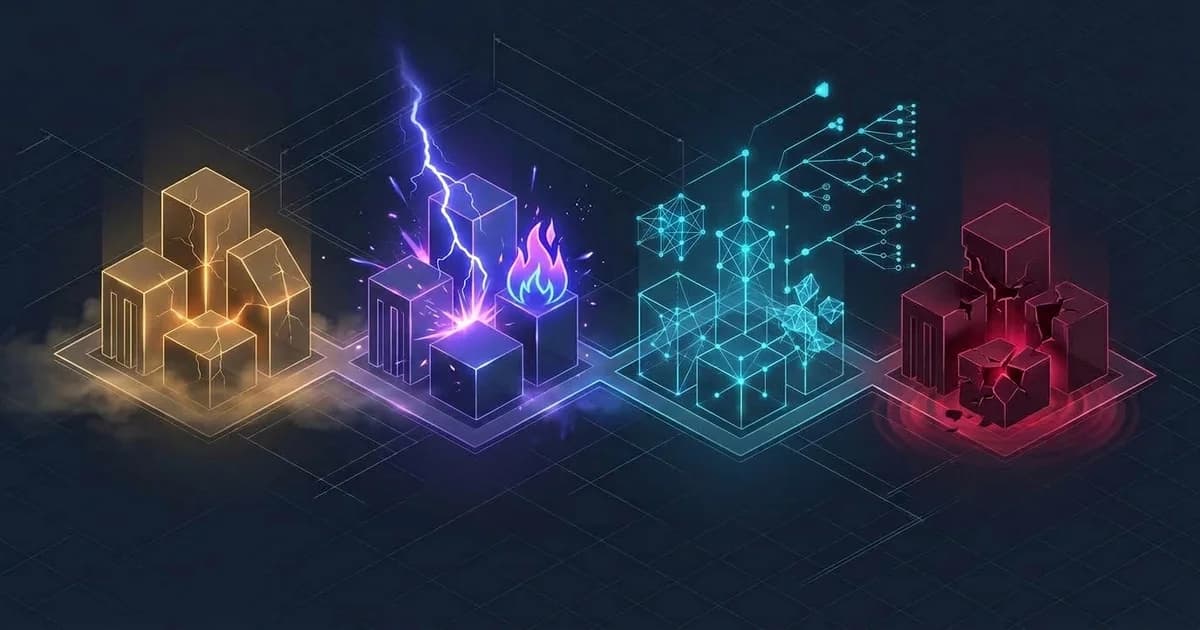
Hazard
A pre-existing physical, behavioral, or legal condition increasing the probability or severity of an insured loss.
Peril
The immediate, active event or specific cause of property destruction, bodily injury, or casualty loss.
Risk
Uncertainty regarding financial outcome or exposure to potential loss. Pure risk is insurable; speculative is not.
Loss
The measurable reduction, diminution, or disappearance of economic value, physical property, or legal entitlement.
Executive Overview: Navigating Insurance Theory on the P&C Exam
On state Property and Casualty licensing exams administered by Prometric, Pearson VUE, and PSI, the introductory module on General Insurance Principles generates disproportionate score loss. Exam writers do not test these terms through basic definitions. Instead, they embed them in multi-clause business and residential scenarios designed to exploit the everyday linguistic overlap between conversational speech and formal underwriting terminology.
In casual conversation, peril, hazard, and risk are used interchangeably. An everyday speaker might call driving on ice a "hazard," a "risk," or a "peril" without distinction. In insurance law, however, these four terms occupy distinct, non-overlapping positions in an unbroken causal sequence. Conflating them forfeits foundational points that anchor your entire exam score.
Under standard statutory guidelines and ISO contract principles, an underwriter evaluates exposure through a clear progression: an overarching condition of risk (uncertainty of economic outcome) exists whenever someone owns property or conducts operations; specific hazards (pre-existing physical or behavioral flaws) increase the likelihood or severity of an incident; an active peril (the event causing destruction) strikes; and the resulting physical damage or lost income represents the loss.
Master Comparison Chart: Peril vs. Hazard vs. Risk vs. Loss
Core examination parameters, structural functions, and test distractor traps.
| Concept | Plain-English Definition | Role in Causal Chain | Classic Exam Example | Key Exam Distractor |
|---|---|---|---|---|
| Hazard | A pre-existing condition, physical flaw, character defect, or environmental state increasing the chance or severity of loss. | Pre-loss multiplier; establishes vulnerability before any event occurs. | Ice on porch steps, oily rags beside a heating furnace, frayed wiring, leaving keys in the ignition. | Confusing the hazard (black ice) with the peril (fall) or resulting injury (fractured wrist). |
| Peril | The specific, immediate event or active cause of property destruction, bodily harm, or legal liability. | Active triggering event directly inflicting physical or economic damage. | Fire, lightning, windstorm, tornado, hail, theft, vehicle collision, vandalism, explosion. | Mistaking peril as "the financial loss" rather than the physical agent of damage itself. |
| Risk | Uncertainty regarding financial outcome; exposure to the possibility of suffering an economic loss. | Overarching economic reality that makes insurance contracts necessary and viable. | A commercial property owner facing uncertainty over whether a hurricane or fire will destroy their building. | Assuming all risks are pure risks or that speculative financial gambles can be covered by private insurance. |
| Loss | Measurable reduction, decrease, or disappearance of monetary value, physical property, or legal entitlement. | Final physical or consequential economic outcome at the conclusion of the event sequence. | $50,000 to rebuild a collapsed commercial roof (direct loss); $15,000 lost rental income (indirect loss). | Failing to separate immediate physical damage (direct) from subsequent economic loss of use (indirect). |
Peril Deep-Dive: The Direct Cause of Loss & Common Exam Perils
How policies enumerate, categorize, and define active agents of destruction.
Under standard property and casualty legal definitions, a peril is defined as the specific event, force, or active agent that causes a financial loss. If you ask, "What physical phenomenon or event actually occurred to damage the property?" the factual answer is the peril. Insurance contracts are drafted entirely around which perils they agree to indemnify, which perils they restrict through sublimits, and which perils they exclude from coverage.
Common Exam Perils in Standard Property Contracts
Fire requires rapid oxidation producing visible flame or glow. Policies indemnify hostile fires (escaped from intended confines or uncontained), excluding friendly fires (contained in stoves/fireplaces). Lightning is sudden atmospheric electrical discharge causing thermal and mechanical destruction.
Atmospheric forces causing exterior structural destruction. Under standard ISO forms, interior water damage from rain, snow, or sand is excluded unless the direct force of wind or hail first damages the exterior roof or walls, creating an actual opening.
Theft is unlawful taking of personal property with intent to permanently deprive the owner. Vandalism is willful physical defacement. Both perils are subject to vacancy restrictions: standard ISO forms suspend coverage if a building is vacant over 60 consecutive days.
In auto coverage (PAP Part D), collision covers impact with another vehicle, object, or rollover. In commercial property, vehicle damage covers physical impact from a vehicle hitting a building, excluding vehicles owned or operated by the insured.
Never identify a hazard as the cause of loss on a licensing exam. Water on a kitchen floor does not cause a broken bone; slipping and falling onto the floor is the event (peril/accident), while the wet floor is merely the physical hazard that magnified the probability that the fall would occur. If an exam question asks for the peril, look strictly for the active event that directly inflicted the damage.
Hazard Deep-Dive: Physical, Moral, Morale, and Legal
Underwriting classifications that increase loss frequency and loss severity.
A hazard is an underlying condition, environmental state, behavioral trait, or institutional reality that increases the probability of an insured peril occurring, or amplifies the severity of loss once that peril strikes. Hazards do not inflict physical damage directly; they act as multipliers elevating claim frequency and severity. Underwriters classify hazards into four distinct categories:
Physical Hazard
A tangible, structural, or material condition of property that makes a loss more likely. Observable, inspectable during underwriting audits, and remediable through maintenance.
• Bald tires on a vehicle operating in heavy rain.
• Oily rags stored beside an unventilated furnace.
• Cracked sidewalks or ice-covered exterior stairwells.
• Outdated knob-and-tube wiring carrying heavy modern loads.
A condition arising from conscious dishonesty, fraudulent intent, or criminal character. Involves deliberately causing, faking, or exaggerating a loss to collect claim money.
• A business owner committing arson to collect building policy limits.
• Staging a fake residential burglary to claim replacement cost on old items.
• Concealing felony fraud or license suspensions on an application.
• Exaggerating bodily injury claims following a minor 5-mph bumper tap.
An attitude of carelessness, apathy, or indifference arising from knowing insurance exists. Involves no intent to commit fraud; it is characterized by reckless neglect.
• Leaving tools in an unlocked truck: "Insurance covers theft."
• Failing to maintain fire extinguishers or test smoke alarms in a building.
• Driving recklessly in storms knowing collision coverage will repair the car.
• Neglecting to salt an icy commercial entryway because liability insurance exists.
Legal Hazard
Judicial developments, statutes, or regulatory climates that increase the frequency, severity, or unpredictability of insurance liability claim payouts.
• Jurisdictions known for runaway jury verdicts on pain and suffering.
• Statutes imposing joint-and-several liability on minor commercial parties.
• Mandatory coverage extensions enacted retroactively after disasters.
• Aggressive bad-faith litigation penalty statutes increasing defense pressures.
- Moral ends in L = Lying, Larceny, and bad Legal character (conscious intentional fraud to collect claim money).
- Morale ends in E = Easygoing, Empty-headed, and Indifferent attitude (careless negligence because "insurance will handle it").
Risk Deep-Dive: Pure vs. Speculative Risk & Elements of Insurable Risk
Uncertainty analysis, mathematical predictability, and commercial insurability limits.
In actuarial science, risk is defined strictly as uncertainty regarding financial loss. It represents the condition of being exposed to a potential loss without knowing whether, when, or to what magnitude it will materialize. Risk analysis is divided into pure risk and speculative risk.
Pure Risk
Only two possible outcomes: loss or no loss (breaking even). Zero possibility of financial gain.
Examples: Owning a home (burns or does not), driving a vehicle (crashes or does not). Pure risk is the only type of risk private insurance covers.
Speculative Risk
Three possible outcomes: loss, break-even, or gain (profit).
Examples: Stock market investing, gambling, real estate speculation, starting a business. Uninsurable because indemnifying losses would create intolerable moral hazard.
Standard Actuarial Criteria for an Insurable Risk
Crucial Exam Guardrail: Do NOT assume every pure risk is automatically insurable. For an insurer to issue a policy, a pure risk must meet six criteria:
Accidental, unintended, outside the insured's direct control.
Identifiable time, exact place, verifiable cause, and dollar value.
Enables actuarial rate calculation via the Law of Large Numbers.
Peril must not strike all units at once (war/nuclear excluded).
Vast pool of similar units ensures reliable probability estimates.
Affordable to buyers while guarding against adverse selection.
Loss Deep-Dive: Direct vs. Indirect (Consequential) Loss
Physical damage valuations, operational interruptions, and secondary financial harm.
In property and casualty insurance jurisprudence, loss represents the unintended reduction, decline, or total extinguishment of economic value, physical property, or legal entitlement. When a covered peril strikes an insured exposure unit, the resulting financial damage manifests in two distinct operational forms: direct loss and indirect (consequential) loss.
Direct Loss
Immediate, tangible physical destruction, damage, or theft of real or personal property resulting directly from the uninhibited impact of an insured peril without an intervening secondary event.
• Flames destroying the framing, drywall, and roof trusses of an office building.
• Water from fire department hoses soaking warehouse inventory during fire suppression.
• A falling tree branch crushing an automobile hood and shattering the windshield.
• Burglars prying open an exterior door and stealing $15,000 of power tools.
Indirect Loss (Consequential)
Secondary economic or operational loss resulting from the inability to use, occupy, or operate damaged property. An indirect loss cannot occur in a vacuum; it strictly requires an underlying covered direct loss as its legal predicate.
• A displaced homeowner incurring $5,000 in hotel lodging under Coverage D (ALE) while a burned home is rebuilt.
• A restaurant losing $75,000 in net business income under Business Interruption while kitchen repairs take place.
• A commercial landlord losing $3,500 monthly fair rental value while an apartment is repaired after a storm.
• Extra expenses to lease temporary refrigeration trailers after walk-in freezers suffer fire damage.
Causal Chain Analysis: How the Four Concepts Connect
Tracking a complete incident timeline from vulnerability to financial consequence.
To master how licensing exams weave these four concepts into scenario questions, examine this realistic commercial restaurant scenario. Watch how each factor maintains its unique technical identity throughout the chronological timeline:
The Downtown Bistro Kitchen Incident
A high-volume Italian restaurant operates a busy commercial kitchen with aging wiring and heavy grease accumulation.
Uninsulated electrical wiring behind the deep fryer combined with heavy accumulated grease filters.
Condition that increased loss probabilityA sudden electrical short ignites a hostile fire that spreads along the grease ductwork.
The active cause of destruction$85,000 in charred cooking equipment, collapsed ventilation hoods, and water-damaged kitchen drywall.
Immediate physical damage to property$40,000 in lost net operating profit and ongoing staff salaries during the two-month restoration shutdown.
Secondary financial loss from inability to operateProximate Cause: The Dominant Initiating Cause on Insurance Exams
The legal doctrine connecting initiating perils to final property destruction.
In multi-event losses, damage is rarely inflicted by a single isolated event. Under insurance legal doctrine, proximate cause is defined as the efficient, dominant, and sufficiently connected cause that sets in motion an unbroken sequence of events leading directly to the loss, without the intervention of a new, independent superseding force.
The Multi-Event Causation Sequence: Windstorm to Frozen Pipes
Consider a classic licensing exam problem: A winter windstorm topples a transmission pole, cutting power to a home. Without electricity, the furnace fails in sub-zero temperatures. Thirty-six hours later, plumbing pipes freeze and rupture, flooding the finished basement with three feet of water.
The windstorm (an insured peril) topples the power line.
Power outage → loss of heat → freezing temperatures indoors → frozen pipes.
Pipes burst and water floods basement carpet and furniture.
Exam Determination: Even though the immediate physical agent touching the carpet was water, the proximate cause of the loss is the windstorm. Because windstorm set the continuous chain in motion without an independent intervening event, the loss is evaluated under windstorm coverage terms.
The English word "proximate" shares its Latin root with "proximity" (closeness). Many candidates instinctively choose the event that occurred closest in time or physical contact with the property. On insurance licensing exams, this is 100% incorrect. Proximate cause refers to the efficient, initiating, and dominant cause, not the temporal or geographical end of the chain.
Named Perils vs. Open Perils: Coverage Triggers & Burden of Proof
How policy forms allocate the evidentiary burden when claims are disputed.
Property insurance contracts are built on one of two fundamental coverage architectures: named perils or open perils (special form). How a policy is drafted determines which causes of loss are covered and, crucially, which party bears the legal burden of proof during a claim dispute.
Named Perils Coverage
The policy exclusively covers causes of loss explicitly listed in the contract (e.g., the 16 broad named perils in an HO-2 form). If a cause is not named, no coverage exists.
The insured bears the initial burden of proving that physical damage was caused directly by a listed, named peril.
Open Perils (Special Form)
The policy covers all accidental, direct physical losses to covered property except causes explicitly excluded (e.g., flood, earth movement, wear-and-tear, intentional acts).
The insurer bears the burden of establishing that an exclusion applies once the insured shows direct physical damage occurred.
Factual Qualification: While this burden of proof represents the standard examination baseline, exact evidentiary rules, anti-concurrent causation enforcement, and procedural burdens can be modified by state insurance statutes, case law, or specific endorsements.
For a complete breakdown of homeowners policy forms and how Coverages A, B, and C utilize named versus open perils, read our guide: Homeowners Policy Forms HO-2 through HO-8 Compared.
High-Yield Exam Distinctions: Six Critical Contrasts
Side-by-side breakdowns of the most frequently tested P&C concept pairs.
| Comparison Pair | Concept A | Concept B | High-Yield Exam Takeaway |
|---|---|---|---|
| 1. Peril vs. Hazard | Peril: The active, direct cause of physical destruction (e.g., lightning strike). | Hazard: The pre-existing condition that increases likelihood of loss (e.g., dead tree overhanging roof). | Perils trigger claims; hazards make perils more likely or more destructive. |
| 2. Moral vs. Morale Hazard | Moral: Dishonesty, criminal intent, or insurance fraud (e.g., staging theft or arson). | Morale: Carelessness or apathy because insurance exists (e.g., leaving doors unlocked). | Moral = intentional bad character; Morale = careless attitude. Never treat as synonyms. |
| 3. Pure vs. Speculative Risk | Pure Risk: Only chance of loss or no loss (e.g., house burning). Insurable. | Speculative Risk: Chance of loss, break-even, or gain (e.g., stock market). Uninsurable. | Insurance only covers pure risk. Speculative risk involves voluntary exposure for profit. |
| 4. Direct vs. Indirect Loss | Direct Loss: Physical damage to tangible property (e.g., burned kitchen). | Indirect Loss: Secondary economic loss of use (e.g., lost business revenue or hotel bills). | Indirect loss requires an initial direct loss caused by an insured peril. |
| 5. Proximate Cause vs. Closest Cause | Proximate Cause: The dominant, initiating cause setting the unbroken chain in motion. | Closest Cause: The temporal or physical event immediately touching the property at the end. | Proximate cause controls coverage, not the event that occurred last in time. |
| 6. Named vs. Open Perils | Named Perils: Only listed causes covered. Insured must prove cause was named. | Open Perils: All causes covered except exclusions. Insurer must prove exclusion applies. | Shifts burden of proof from insured (named) to insurer (open/special). |
Five High-Yield Scenario-Based Exam Traps
Interactive questions testing nuance, multi-event causality, and exam distractor patterns.
60-Second Memory Matrix: Fast Exam Recall
Quick-reference matrix for last-minute cramming and immediate review.
| Concept | Ask Yourself | Quick Formula / Keyword | Primary Exam Trap |
|---|---|---|---|
| Hazard | What increased the chance or severity? | Condition / Multiplier | Confusing the condition with the actual cause of damage. |
| Peril | What active event caused the damage? | Cause of Loss | Assuming peril means "danger" rather than the specific event. |
| Risk | What uncertain financial exposure exists? | Uncertainty of Loss | Believing speculative risk (gambling/stocks) can be insured. |
| Loss | What value was destroyed or diminished? | Reduction in Value | Failing to separate direct physical loss from indirect loss of use. |
Remember: A Hazard creates the vulnerability; the Peril strikes as the active cause; the Direct Loss inflicts physical damage; and the Indirect Loss produces consequential economic harm. Risk is the uncertainty that surrounded this entire possibility from day one.
Final Exam Readiness & Conversion Hub
Practice questions, full simulation exams, and downloadable study guides.
P&C Practice Test
Test your mastery of General Insurance Principles, auto, homeowners, and commercial lines with realistic instant-graded questions.
Full P&C Exam Simulator
Timed, state-specific practice exams with over 1,500 questions, in-depth rationale, and comprehensive performance tracking.
Free P&C Cheat Sheet
Download our printable cheat sheet summarizing all coverage parts, hazard definitions, math formulas, and high-yield traps.
Related Property & Casualty Exam Guides & Practice Tests
Insurance Exam Test-Day Guide: PSI vs. Pearson VUE, IDs, Scoring and Remote Testing (2026)
Master your insurance exam test day. Learn how PSI and Pearson VUE testing commonly work, including check-in, IDs, remote testing, scoring, rescheduling, and five interactive test-day traps.
HMO vs. PPO vs. EPO vs. POS: Health Insurance Exam Comparison (2026)
Master HMO vs. PPO vs. EPO vs. POS plan structures for your Life & Health insurance exam. Learn network boundaries, PCP gatekeeper rules, referral requirements, out-of-network reimbursement, capitation vs. fee-for-service, and 5 interactive scenario traps.
Medicare, Medicaid and Medicare Supplement Insurance: What the Exam Tests (2026)
Master Medicare, Medicaid, and Medicare Supplement (Medigap) insurance for your Life & Health licensing exam. Learn Parts A–D, the SNF 3-day rule, Medigap rules, Medicaid coordination, and high-yield exam traps.