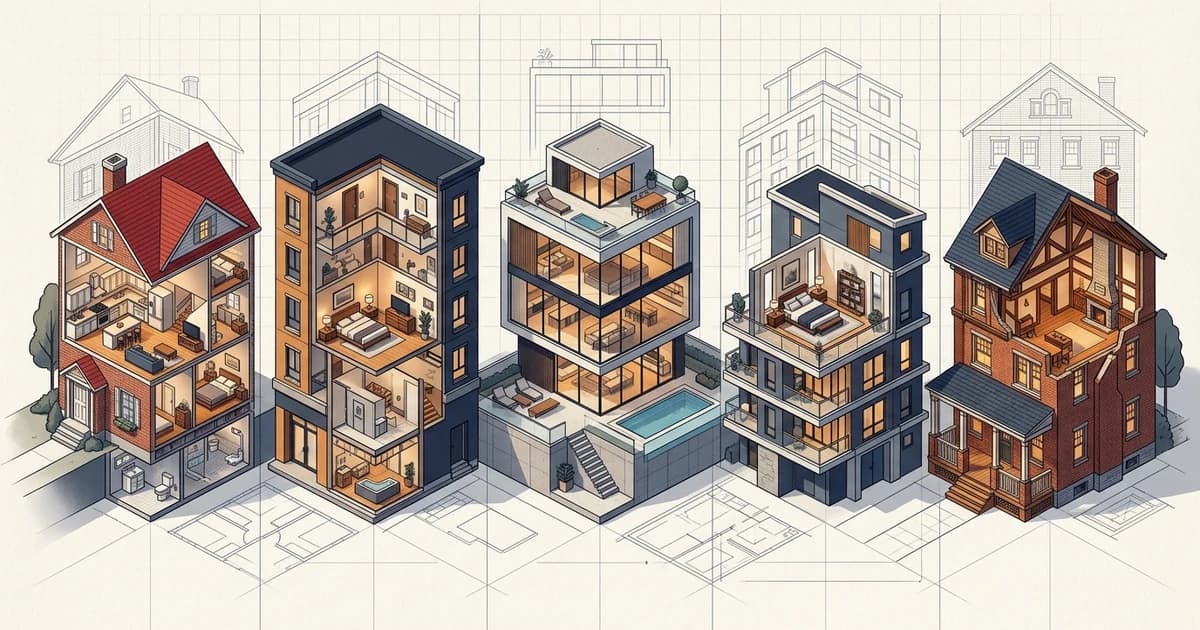
6 Core Forms
HO-2, HO-3, HO-4, HO-5, HO-6, and HO-8 tailored for specific occupancy and structural risks.
Peril Division
Master named perils vs. open perils across dwelling structures vs. personal property contents.
Valuation Rules
Replacement Cost, Actual Cash Value (ACV), and Functional Replacement Cost for older homes.
High-Yield Traps
HO-3 vs. HO-5 contents, HO-4 zero building coverage, HO-6 condo bylaws, and mysterious disappearance.
Standard ISO Form Framework for Exam Preparation
State licensing exams administered by Pearson VUE, PSI, and Prometric test standard Insurance Services Office (ISO) Homeowners policy forms. Individual insurance companies frequently file proprietary endorsements or customized policy jackets, and specific state insurance codes may alter particular provisions. The comparisons, peril lists, and valuation rules detailed in this guide represent the foundational ISO standards tested on state examinations.
If you are preparing for your Property and Casualty (P&C) insurance licensing exam, you can count on facing multiple scenario questions about Homeowners policy forms. Testing vendors do not simply ask you to recite definitions. Instead, they present real-world loss scenarios and expect you to instantly identify which form covers the building, which form covers the contents, and whether a specific cause of loss qualifies under named perils or open perils.
Candidates frequently stumble because the forms sound deceptively similar: Broad, Special, Comprehensive, and Modified. Understanding how these six forms differ across Homeowners policies will turn one of the most trap-heavy areas of the examination into guaranteed points.
At a Glance: The Six Standard Homeowners Forms
Before analyzing the detailed line-by-line coverages, review the primary purpose, eligible occupant, and peril structure of each standard form:
Broad Form
Budget-conscious protection insuring both dwelling and personal belongings against 16 specific named broad perils.
Special Form
The industry standard single-family policy. Provides open-perils protection on dwelling structures, but named-perils on personal belongings.
Contents Broad (Renters)
Designed specifically for tenants. Insures personal belongings and loss of use. Provides zero building structure coverage.
Comprehensive Form
The broadest residential coverage available. Insures both dwelling structures and personal belongings on an open-perils basis.
Unit-Owners Form
Tailored for condominium unit owners. Insures personal property plus interior alterations, built-in fixtures, and appliances inside the unit.
Modified Coverage Form
Designed for older homes where replacement cost far exceeds market value. Uses functional replacement cost and basic named perils to prevent moral hazard.
The Master HO-Form Comparison Chart
Side-by-side breakdown of property eligibility, peril frameworks, and loss settlement mechanics.
| Form | Eligible Occupant | Dwelling & Structures (Cov A & B) | Personal Property (Cov C) | Key Exam Distinction |
|---|---|---|---|---|
| HO-2Broad Form | Owner-occupant of 1–4 family dwelling | Named Perils 16 Broad Perils; Replacement Cost (if 80% coinsurance met) | Named Perils 16 Broad Perils; Actual Cash Value (ACV) | Pure named-perils policy. Insures against broad perils, but does NOT cover accidental damage outside the 16 listed perils. |
| HO-3Special Form | Owner-occupant of 1–4 family dwelling | Open Perils Direct physical loss except exclusions; Replacement Cost | Named Perils 16 Broad Perils; Actual Cash Value (ACV) | Top Exam Trap:Building is open perils, but contents are strictly named perils. Unendorsed HO-3 does NOT cover lost or misplaced jewelry. |
| HO-4Contents Broad | Residential tenant renting house or apartment | None ($0) No Coverage A or Coverage B for building structure | Named Perils 16 Broad Perils; Actual Cash Value (ACV) | Zero Building Coverage:Protects tenant belongings and personal liability. Structural damage to the building belongs to the landlord's policy. |
| HO-5Comprehensive | Owner-occupant of high-value residence | Open Perils Direct physical loss except exclusions; Replacement Cost | Open Perils Open Perils on personal property. Typically replacement cost in modern packaged/endorsed policies; base unendorsed ISO wording defaults to ACV. | Broadest Protection:Open perils on BOTH dwelling and personal property. Covers mysterious disappearance of jewelry up to special sublimits. |
| HO-6Unit-Owners | Owner of condominium or townhouse unit | Limited Cov A Interior additions, fixtures, cabinetry, and alterations | Named Perils 16 Broad Perils; Actual Cash Value (ACV) | Interior Fixtures Only:Insures the unit owner's private airspace and finishes. Common elements (roof, exterior framing, lobby) belong to the HOA master policy. |
| HO-8Modified Coverage | Older / historic home where Replacement Cost > Market Value | Basic Named Functional Replacement Cost / Modified ACV | Basic Named 11 Basic Perils only; Actual Cash Value | Moral Hazard Remedy:Replaces obsolete or antique building materials (lath-and-plaster) with modern, functional materials (drywall) to eliminate moral hazard. |
Named Perils vs. Open Perils: The Crucial Exam Divide
To pass your licensing exam, you must clearly distinguish between named perils and open perils. This is not merely an academic definition; it determines which party carries the legal burden of proof when a claim is filed.
Under a named-perils contract, the policy explicitly lists every single cause of loss covered. If a loss is caused by something not explicitly listed in the contract, there is zero coverage.
Under an open-perils contract, the policy covers all direct physical losses to property except those causes of loss that are specifically named on the contract's exclusion list.
The Three Peril Tiers Tested on Exams
These counts reflect standard ISO property-peril groupings commonly used in exam study materials; state forms and policy wording can vary.
Fire, Lightning, Windstorm, Hail, Explosion, Riot or Civil Commotion, Aircraft, Vehicles, Smoke, Vandalism/Malicious Mischief (V&MM), and Volcanic Eruption.
Common exam mnemonic: FLEW SHAVVER or REV C HAIN.
Includes all 11 basic perils PLUS: (1) Falling objects, (2) Weight of ice, snow, or sleet, (3) Accidental discharge or overflow of water/steam, (4) Sudden and accidental tearing apart/cracking of heating/AC/sprinkler systems, (5) Freezing of plumbing, heating, or AC systems, and (6) Sudden damage from artificially generated electrical current.
Common exam mnemonic: BIG AFFECT.
Covers any unforeseen physical loss unless specifically excluded. Universal ISO exclusions tested on licensing exams include: Flood/Surface water, Earth Movement (Earthquake, Landslide), War/Nuclear Hazard, Intentional Loss by the insured, Government Action, Ordinance or Law, Neglect, Wear & Tear, Rust, Mechanical Breakdown, and Smog.
Coverage A–F Exam Anatomy (The Policy Framework)
Every standard ISO Homeowners policy is structured into two main sections: Section I (Property Coverages) and Section II (Liability Coverages). Understanding how each lettered coverage operates—and which forms omit them—is essential for answering multi-part scenario questions.
Coverage A — Dwelling
Primary StructureProtects the residential residence premises, attached structures (like an attached garage, deck, or porch), and materials/supplies located on or next to the premises used to construct, alter, or repair the dwelling.
Coverage B — Other Structures
Detached Real PropertyProtects buildings on the residence premises separated from the main dwelling by a clear space (e.g., detached garage, storage shed, fences, gazebos, or swimming pools). Standard exam baseline is typically 10% of Coverage A.
Coverage C — Personal Property
Movable BelongingsCovers personal property owned or used by an insured anywhere in the world (furniture, clothing, electronics, appliances). Standard exam baseline on owner forms is typically 50% of Coverage A; selected by the insured on HO-4 and HO-6.
Coverage D — Loss of Use
Indirect LossReimburses the insured for Additional Living Expenses (ALE) necessary to maintain their normal standard of living when a covered peril makes the residence premises uninhabitable, plus Fair Rental Value if part of the home was rented out.
Coverage E — Personal Liability
Legal FaultProtects the insured if a lawsuit or claim is brought against them for bodily injury (BI) or property damage (PD) caused by an occurrence for which they are legally liable. Standard exam baseline is $100,000 per occurrence.
Coverage F — Medical Payments
No-Fault GoodwillPays necessary medical expenses incurred within three years from the date of an accident causing bodily injury to guests or visitors on the residence premises, or off-premises if caused by an insured's activities or pet. Standard baseline is $1,000 per person.
Deep-Dive Analysis: The Six Policy Forms
Detailed examination profiles examining target applicants, peril mechanics, and loss settlement definitions.
HO-2 Broad Form
The HO-2 is a named-perils policy for both building structures and personal property. It provides coverage against the 16 broad perils (FLEW SHAVVER plus falling objects, weight of ice/snow, water pipe overflow, freezing, and accidental electrical damage).
HO-3 Special Form (The Universal Baseline)
The HO-3 is the most common single-family homeowners policy in the United States and the most heavily tested form on licensing exams. It is a hybrid perils policy:
- Coverages A & B (Dwelling & Other Structures): Covered on an open-perils basis (all direct physical losses covered except standard exclusions like flood, earthquake, wear and tear, and intentional loss).
- Coverage C (Personal Property): Covered on a named-perils basis (16 broad perils only).
Licensing exams frequently present a scenario where a homeowner loses a diamond ring or drops an expensive camera into a lake while on vacation. Because the camera or ring was simply lost or misplaced (mysterious disappearance) rather than stolen by theft, the HO-3 pays $0. Contents are strictly named perils!
HO-4 Contents Broad Form (Renters Insurance)
The HO-4 is designed specifically for residential tenants who rent an apartment, condominium, or single-family house. Because the tenant does not own the real estate structure, the policy provides NO Coverage A (Dwelling) and NO Coverage B (Other Structures).
HO-5 Comprehensive Form (Premium All-Risk)
The HO-5 represents the peak of residential property protection. Unlike the HO-3, which restricts personal belongings to named perils, the HO-5 provides open-perils protection for BOTH dwelling structures and personal property.
HO-6 Unit-Owners Form (Condominium / Townhouse)
The HO-6 is tailored for owners of condominium units or residential cooperatives. In a condominium development, ownership is divided into two distinct legal realms:
1. Common Elements (HOA Master Policy): The building exterior, roof, foundation, elevators, shared corridors, and clubhouse are insured under the condo association's commercial master policy.
2. Unit Interior (HO-6 Policy): The unit owner owns and insures the interior airspace: wallpaper, paint, hardwood flooring, custom cabinetry, built-in appliances, and interior partitions under Coverage A (Dwelling), plus their furniture and clothing under Coverage C.
HO-8 Modified Coverage Form (Older & Historic Homes)
The HO-8 solves a critical underwriting dilemma: older homes whose replacement cost far exceeds their current market value. Consider a 120-year-old Victorian home with handcrafted woodwork, custom masonry, and lath-and-plaster walls. It might cost $500,000 to rebuild with historic antique materials, but have a real estate market value of only $150,000 in an economically depressed area.
Five High-Yield HO Exam Traps (Scenario Deconstruction)
These five scenario types represent the most commonly missed questions on state property examinations.
Scenario: The Missing $4,500 Diamond Ring on Vacation
HO-3 Response: Pays $0. Coverage C on an HO-3 covers 16 named perils. “Mysterious disappearance” or losing an item is not theft and not a named peril.
HO-5 Response: Pays $1,500 (capped at the special jewelry sublimit). Because HO-5 covers personal property on an open-perils basis, losing an item is covered, but is subject to the contract's special internal sublimit on jewelry.
Scenario: Tenant Kitchen Fire Burns Apartment Walls
Furniture Damage ($8,000): Covered under Coverage C (Personal Property) as fire is a broad named peril.
Kitchen Walls & Cabinets ($20,000): NOT covered under Section I Property because HO-4 contains zero Coverage A. Structural repairs are covered by the landlord's building policy (or recovered via subrogation from the tenant's Coverage E Personal Liability if the tenant was negligent).
Scenario: Plaster Wall Replacement in a 1910 Craftsman
Functional Replacement Cost ($4,000): The HO-8 pays to replace the damaged wall with modern, commonly available functional materials (sheetrock drywall) rather than funding the antique plaster restoration.
Scenario: Common Pipe Burst in Condo Building
Common Pipe & Hallway: Covered by the Condominium Association Master Policy as shared common property.
Unit 4B Hardwood Floors & Cabinets: Covered under the unit owner's HO-6 Coverage A (Dwelling / Additions and Alterations) according to the association master deed responsibilities.
Scenario: Hurricane Wind Tears Roof, Followed by Storm Surge Flood
Wind & Rain Damage ($15,000): COVERED. The interior water damage occurred because the covered peril of windstorm first created a direct opening in the building envelope.
Flood Surge Damage ($30,000): EXCLUDED ($0). Standard Homeowners policies universally exclude surface water, tidal water, and storm surge flooding under the Anti-Concurrent Causation clause. Flood requires a separate National Flood Insurance Program (NFIP) or private flood policy.
Quick Memory Matrix: 60-Second Exam Cheat Sheet
Commit this compact reference matrix to memory before walking into your exam test center:
| Form | Building (A&B) | Contents (C) | Settlement | The Memory Hook |
|---|---|---|---|---|
| HO-2 | Named (16) | Named (16) | RC Building / ACV Contents | “Broad” named perils on both building and contents |
| HO-3 | Open Perils | Named (16) | RC Building / ACV Contents | Open outside (building), Named inside (belongings) |
| HO-4 | NONE ($0) | Named (16) | ACV Contents | Renters: 4 walls you don't own |
| HO-5 | Open Perils | Open Perils | RC Building; Contents: typically RC when packaged/endorsed; base ISO defaults to ACV. | Comprehensive: Open everywhere (building & contents) |
| HO-6 | Interior Walls Only | Named (16) | RC Fixtures / ACV Contents | Condo unit: 6 sides of an interior cube |
| HO-8 | Basic Named (11) | Basic Named (11) | Functional Replacement | Historic: Older homes, Replacement > Market value |
Test Your Knowledge on Real Homeowners Exam Questions
Take our free Property & Casualty practice test. Practice realistic scenario questions covering HO-2 through HO-8, dwelling forms (DP-1 to DP-3), coinsurance math, and personal auto policies with instant explanations.
Related Property & Casualty Exam Guides & Practice Tests
Insurance Exam Test-Day Guide: PSI vs. Pearson VUE, IDs, Scoring and Remote Testing (2026)
Master your insurance exam test day. Learn how PSI and Pearson VUE testing commonly work, including check-in, IDs, remote testing, scoring, rescheduling, and five interactive test-day traps.
HMO vs. PPO vs. EPO vs. POS: Health Insurance Exam Comparison (2026)
Master HMO vs. PPO vs. EPO vs. POS plan structures for your Life & Health insurance exam. Learn network boundaries, PCP gatekeeper rules, referral requirements, out-of-network reimbursement, capitation vs. fee-for-service, and 5 interactive scenario traps.
Medicare, Medicaid and Medicare Supplement Insurance: What the Exam Tests (2026)
Master Medicare, Medicaid, and Medicare Supplement (Medigap) insurance for your Life & Health licensing exam. Learn Parts A–D, the SNF 3-day rule, Medigap rules, Medicaid coordination, and high-yield exam traps.