Master the Rhode Island Property & Casualty Insurance Exam
Prepare for the official Rhode Island Property and Casualty producer licensing examination. Master personal auto liability minimums, homeowners policy forms, commercial general liability, and state insurance regulations. Study for combined P&C or target Property-only or Casualty-only. Preparing for Life & Health? Check here.
No signup required • No ads • Updated for 2026
RI Updated
P&C Questions
Pass Rate
Student Rating
How to Pass the Rhode Island Property & Casualty Exam
Passing the Rhode Island Property & Casualty (P&C) insurance exam on your first try requires mastering personal auto policy forms, homeowners policies (HO-2 through HO-8), commercial package policies (CPP), commercial liability, workers compensation, and Rhode Island-specific Department of Insurance regulations.
Build your test-day readiness by practicing with our free Rhode Island P&C practice tests, access the printable Rhode Island P&C Exam Cheat Sheet PDF, and review the official Rhode Island P&C Licensing Guide.
Focusing on a single line or Life & Health? Study with dedicated modules for the Rhode Island Property-Only Exam, Rhode Island Casualty-Only Exam, or check out Rhode Island Life & Health Practice.
Quick glance at the Rhode Island Property & Casualty Exam
Topics Covered
Who Takes This Exam?
Aspiring Insurance Agents
Anyone seeking a Property & Casualty insurance license in Rhode Island must pass this state licensing exam administered by Pearson VUE.
Pre-Licensing Requirements
You must be 18+, complete pre-licensing education requirements, and submit any required documentation before your Rhode Island insurance license can be issued.
Local Testing Centers
Take your Pearson VUE exam in-person at authorized testing locations across Rhode Island, including:
Official Licensing Resources
Access official state contacts, exam guides, and scheduling portals:
Master Your Rhode Island Insurance Licensing Exam
Learn from expert insights and avoid the most common pitfalls that trip up test-takers in Rhode Island, and master key terms in our Glossary.
Study Tips
Expert strategies for success
Master Rhode Island Title 27 & Title 31 Statutes
Dedicate significant study time to state-specific regulations: Superintendent examination cycles (at least once every 5 years), 24 CE hours biennially (including 3 hours of ethics), 30-day address and administrative reporting rules, and 5-year producer record retention.
Drill 25/50/25 Auto Minimums & Residual Markets
Memorize Rhode Island auto mandates: 25/50/25 statutory liability limits, mandatory UM/UIM offer with written rejection option, $200 UMPD deductible, and the Rhode Island Automobile Insurance Plan (RIAIP) for high-risk drivers.
Understand Standard Fire Policy (R.I.G.L. § 27-5) & RIJRA FAIR Plan
Remember that Rhode Island uses the statutory 165-line standard fire policy with a 60-day sworn proof of loss requirement. Note that Rhode Island is NOT a valued policy state (losses adjust on ACV or replacement cost) and residual property risks are placed through RIJRA.
Review Workers Comp Mandates & Beacon Mutual
Remember that Rhode Island workers compensation is compulsory for employers with 1 or more employees, has a 3-day waiting period (retroactive after 14 days), pays medical expenses without monetary caps, and features Beacon Mutual as the competitive state fund and insurer of last resort.
Common Mistakes
Pitfalls to avoid on test day
HO-3 vs HO-5 Personal Property Coverage Forms
Candidates often confuse HO-3 and HO-5: HO-3 provides open-perils coverage on the dwelling structure but named-perils on personal property, whereas HO-5 provides comprehensive open-perils coverage on both dwelling and contents.
Pure Comparative Fault vs Contributory Negligence
Test-takers frequently assume Rhode Island follows modified comparative fault or contributory negligence. Under R.I.G.L. § 9-20-4, Rhode Island follows pure comparative negligence, allowing an injured party to recover damages even if they are 99% at fault, with recovery reduced by their fault percentage.
Auto Cancellation vs Nonrenewal Notice Timelines
Candidates mix up notice windows under R.I.G.L. § 31-47-4: cancellation for nonpayment of premium requires at least 10 days advance written notice, while cancellation for other allowable reasons and policy nonrenewal both require at least 30 days advance notice.
Insolvency Fund Coverage Limits & Workers' Comp Exception
The Rhode Island Insurers' Insolvency Fund (R.I.G.L. § 27-34) caps covered property and casualty claims at $300,000 per occurrence (with a $100 deductible and $10,000 cap on unearned premium). However, workers' compensation claims are exempt from the $300,000 cap and are paid in full.
Ready to put these tips into practice?
Start with our free practice questions and see how you perform, then upgrade to access our complete study system.
Free RI Insurance Exam Practice PDF
Download a comprehensive practice test with 50 Property & Casualty questions, including Rhode Island law topics, with answers. Perfect for offline study!
Instant download • No email required • Updated for 2026
Free RI Cram Cheat Sheet & Guide
Access our comprehensive study cheat sheet covering essential Rhode Island insurance licensing timelines, grace periods, and exam metrics.
Online access • No signup required • Updated for 2026
Your Questions Answered
Quick answers to the most common questions about the Rhode Island insurance licensing exam
How do I pass the Rhode Island Property and Casualty insurance exam on my first try?
Passing the Rhode Island P&C exam on your first attempt requires a balanced study approach: First, master national core property and casualty policy contracts—including Homeowners forms (HO-2 through HO-8), Personal Auto (PAP Parts A–D), Commercial General Liability (CGL occurrence vs. claims-made), Commercial Property, and Workers Compensation. Second, thoroughly study Rhode Island-specific statutes under R.I.G.L. Titles 27, 31, and 28, focusing on 25/50/25 auto limits, RIAIP, RIJRA FAIR Plan, 10-day nonpayment cancellation notice, Beacon Mutual workers comp, and the Insurers Insolvency Fund. Third, take timed practice tests until you consistently score 80% or higher, giving you a confident buffer above Rhode Island's 70% passing threshold.
How many questions are on the Rhode Island Property and Casualty exam and what is the passing score?
The Rhode Island Property and Casualty exams administered by Pearson VUE test general insurance principles and Rhode Island state-specific insurance regulations. For single-line exams (Property Producer Exam 03 or Casualty Producer Exam 04), candidates face approximately 75 to 100 questions with a 2-hour (120-minute) time limit. Candidates must achieve a scaled score of 70% or higher to pass. Pearson VUE provides official score reports immediately upon completion of the computer-based exam.
How much does the Rhode Island Property and Casualty exam cost and where is it taken?
The Pearson VUE examination fee is $80 per exam attempt. Candidates can schedule to take the exam in-person at authorized Pearson VUE testing centers (including locations in Warwick and Providence, Rhode Island, as well as nearby Massachusetts centers) or via Pearson VUE OnVUE online proctoring from a private home or office setting. Appointments can be scheduled through home.pearsonvue.com/ri/insurance.
What are the Rhode Island auto insurance minimum limits and assigned risk plan?
Rhode Island mandates statutory auto liability minimum limits of 25/50/25 under R.I.G.L. § 31-47-2 ($25,000 bodily injury per person, $50,000 bodily injury per accident, and $25,000 property damage). Every personal auto liability policy must offer Uninsured/Underinsured Motorist (UM/UIM) bodily injury coverage equal to liability limits, which the insured may reject in writing. Drivers who are unable to secure insurance in the voluntary market can obtain coverage through the Rhode Island Automobile Insurance Plan (RIAIP), established under R.I.G.L. § 31-33-8.
What are the licensing requirements and pre-licensing education in Rhode Island?
Rhode Island does not require classroom pre-licensing education hours (self-study is permitted). To obtain a resident producer license, an applicant must: (1) be at least 18 years of age, (2) pass the required Pearson VUE licensing exam, (3) undergo a criminal background check (BCI), and (4) submit an electronic application through NIPR (nipr.com) with the state licensing fee. Resident producers must complete 24 hours of approved continuing education (including at least 3 hours of ethics) every two-year biennial renewal period.
How do Workers Compensation and the Insurers Insolvency Fund work in Rhode Island?
Under R.I.G.L. § 28-29-4, workers compensation is compulsory for private employers regularly employing 1 or more employees, with Beacon Mutual serving as the competitive state fund and guaranteed market. Cash disability benefits have a 3-day waiting period that becomes retroactive after 14 days, while medical benefits have no statutory caps. For insurance company liquidations, the Rhode Island Insurers Insolvency Fund (R.I.G.L. § 27-34) covers P&C claims up to $300,000 per claim (subject to a $100 deductible and $10,000 unearned premium cap), while covered workers compensation claims are paid in full without a dollar ceiling.
Your First Step to Getting Licensed
Questions are manually curated by our content team using official Rhode Island Division of Insurance exam outlines and study materials. We adhere to strict Editorial Standards to ensure accuracy. Each question covers topics from the Property & Casualty exam — so you practice with questions that closely mirror the actual Pearson VUE licensing exam.

General Insurance Principles
124 questions

Dwelling & Homeowners
134 questions

Auto (Personal & Commercial)
124 questions

Commercial
106 questions

Rhode Island P&C Law & Ethics
76 questions
Free Full-Length Line Practice Exams (25 Qs Each)
Property-Only Practice Exam Hub
Realistic practice tests covering homeowners policy forms, dwelling policies, commercial property, valuation, and Rhode Island property insurance laws.
Casualty Insurance Practice Exams
Realistic practice tests covering personal auto, CGL, workers' compensation, commercial package policies, and Rhode Island casualty insurance laws.

Flashcards
500+ Flashcards

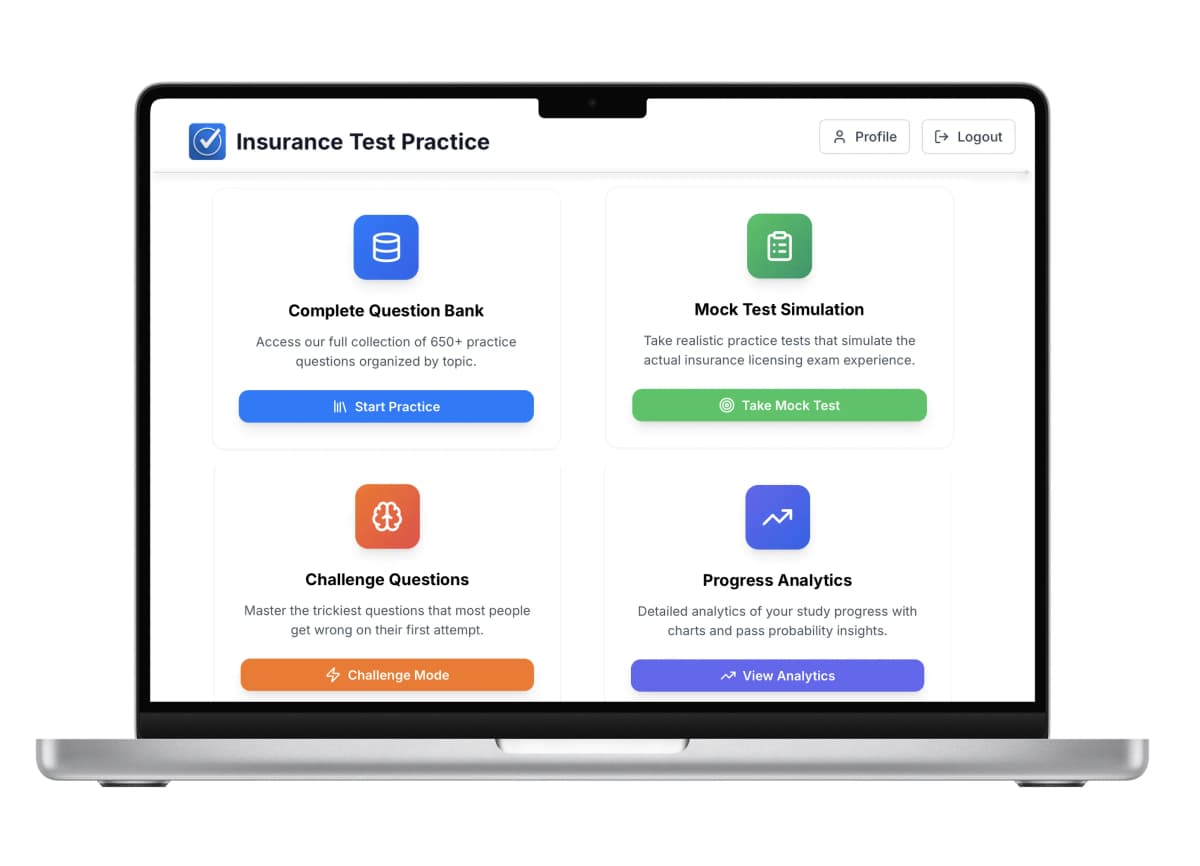
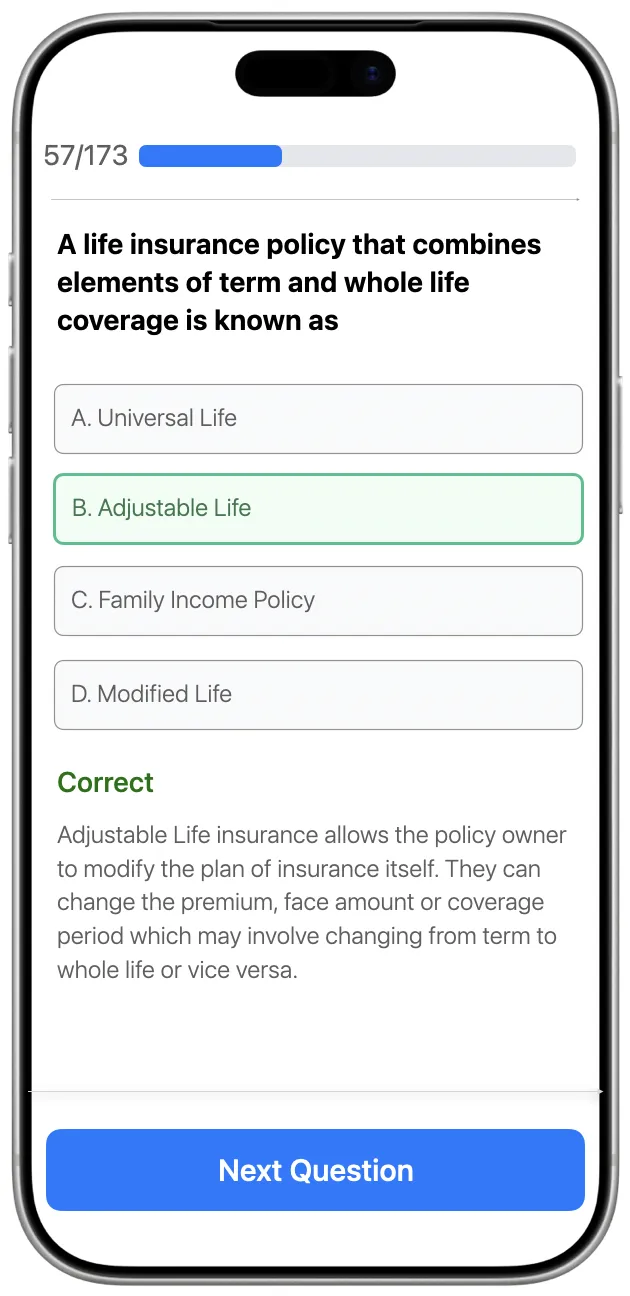
Full Question Bank
850+ exam-like questions

Hard Questions
Tricky questions people miss
Built for One Goal: Pass the Insurance Exam on Your First Try
Practice what the exam actually tests — auto, homeowners, commercial liability, and Rhode Island state law.
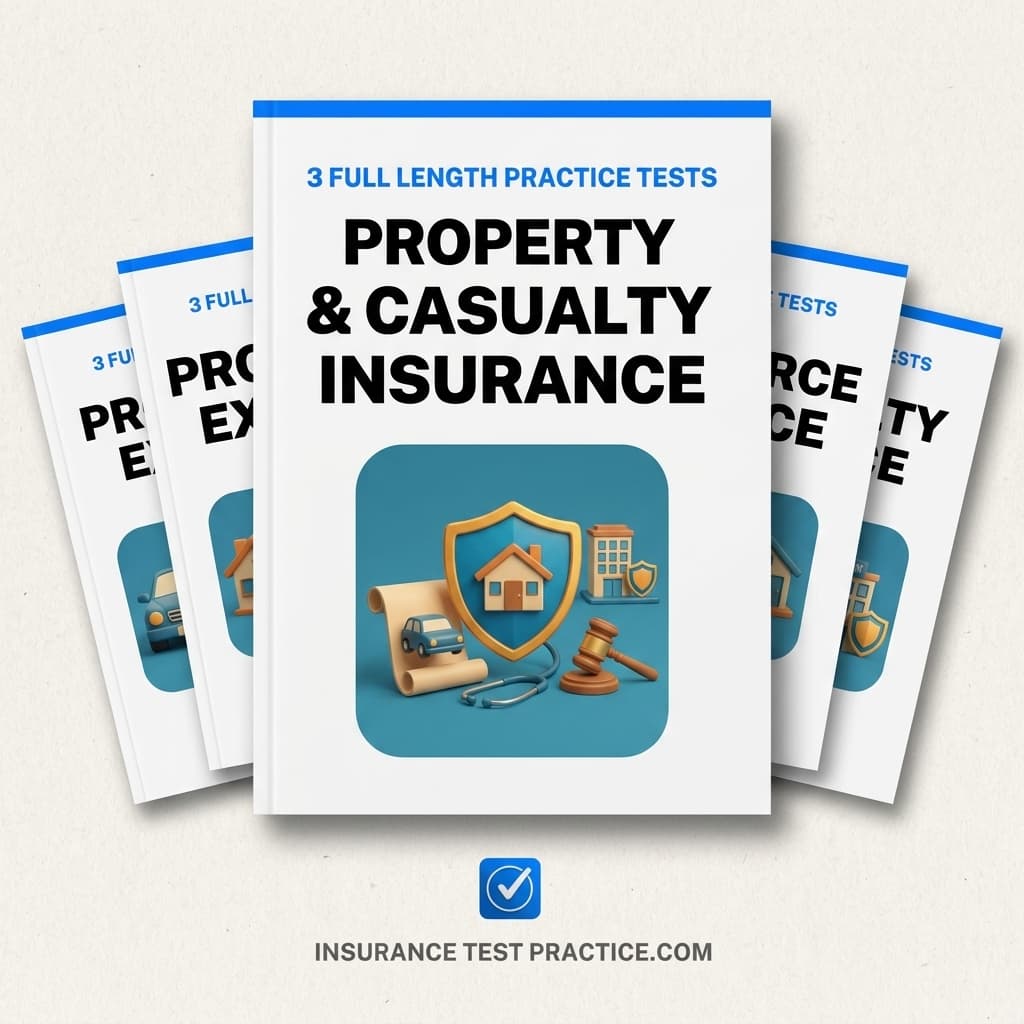
3 Full-Length Practice Tests Included
Get instant access to our printable 450-question practice exam book. Includes 3 complete Property & Casualty insurance practice tests — with dedicated Property and Casualty sections — plus detailed answer keys with explanations. Perfect for timed practice sessions that mirror the real exam.