Master the Michigan Life & Health Insurance Exam
Prepare for the Michigan Life, Accident and Health producer licensing exam administered by PSI for the Michigan Department of Insurance and Financial Services (DIFS). Practice Michigan insurance laws, replacement rules, annuities, and medical expense coverages. Take the combined exam or focus on Life-only or Accident & Health-only. Preparing for P&C? Check here.
No signup required • No ads • Updated for 2026
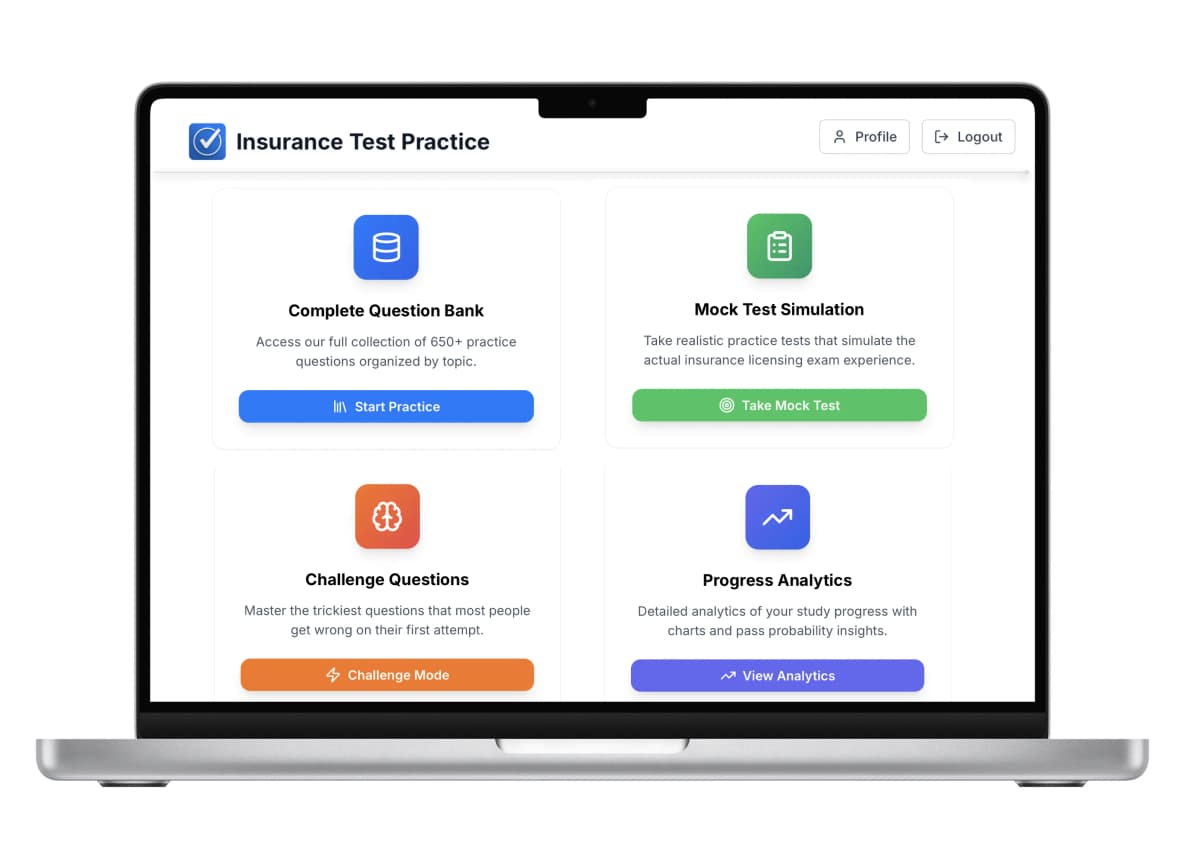
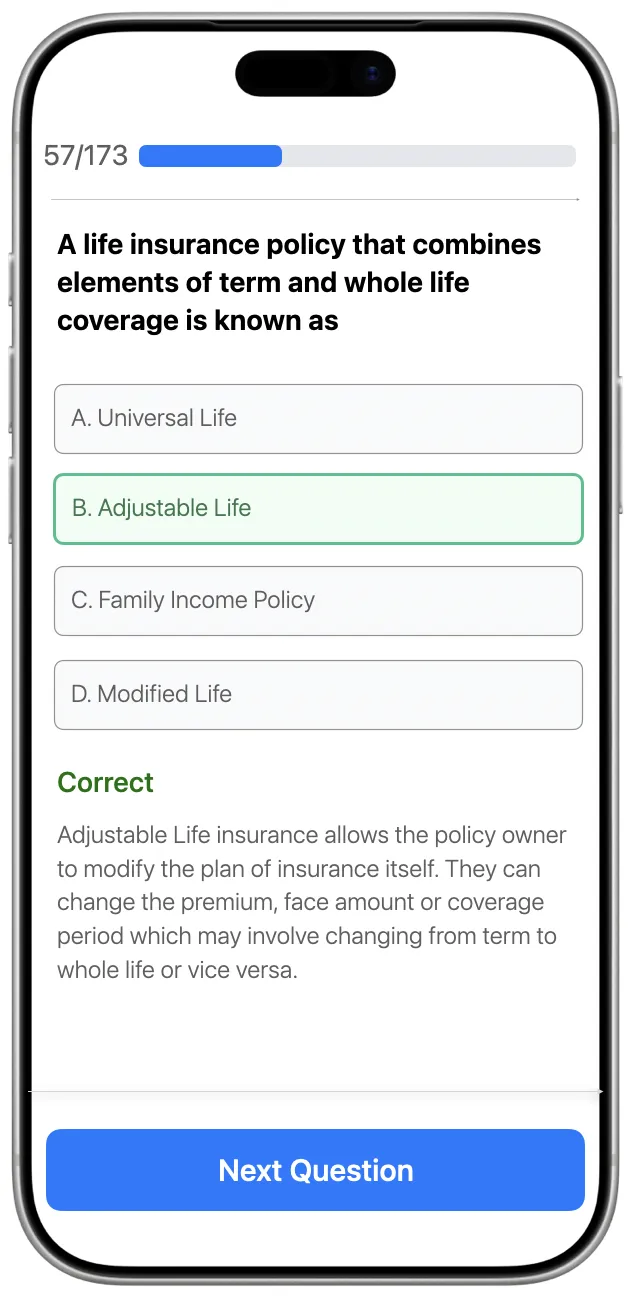
Updated Content
Students Helped
Practice Questions
Student Rating
How to Pass the Michigan Insurance Exam
Quick glance at the Michigan Insurance Exam
Topics Covered
Who Takes This Exam?
Aspiring Insurance Agents
Anyone seeking a Life & Health insurance license in Michigan must pass this state licensing exam administered by PSI.
Pre-Licensing Requirements
You must be 18+, complete pre-licensing education requirements, and submit any required documentation before your Michigan insurance license can be issued.
Local Testing Centers
Take your PSI exam in-person at authorized testing locations across Michigan, including:
Official Licensing Resources
Access official state contacts, exam guides, and scheduling portals:
Master Your Michigan Insurance Licensing Exam
Learn from expert insights and avoid the most common pitfalls that trip up test-takers in Michigan, and master key terms in our Glossary.
Study Tips
Expert strategies for success
Focus on Michigan Insurance Code
Michigan regulates insurance under Act 218 of 1956 (Michigan Compiled Laws). Pay special attention to DIFS rules on producer licensing, replacement regulations, free-look periods (10 days standard, 30 days Medicare supplement), grace periods, and unfair trade practices under MCL 500.2001.
Master annuity concepts thoroughly
Annuities are heavily tested. Understand the differences between fixed, variable, and indexed annuities, as well as surrender charges, suitability requirements, and tax implications.
Practice with PSI-style questions
The Michigan insurance exam uses scenario-based multiple choice questions administered by PSI Services. Practice with realistic questions to build familiarity with the exam format and timing (160 questions in 2.5 hours).
Study life and health insurance together
The combined exam covers both lines. Aim for consistently scoring 80% or higher on practice tests before taking the real exam to ensure a comfortable margin above the 70% pass threshold.
Common Mistakes
Pitfalls to avoid on test day
Michigan replacement regulations
Michigan requires specific replacement notices when replacing existing life insurance policies. Many candidates confuse the required documentation and the duties of the replacing producer versus the existing insurer.
Grace period differences across policy types
Michigan mandates a 30-day grace period for life insurance, a 10-day grace period for individual health insurance, and a 31-day grace period for group health policies. Mixing these up costs points on the exam.
Michigan Guaranty Association limits
Candidates often guess at the Michigan Life and Health Insurance Guaranty Association coverage limits. Know the exact amounts: $300,000 life death benefit, $100,000 cash value, and $300,000 health insurance benefits.
DIFS vs. other department names
Michigan's insurance regulator is the Department of Insurance and Financial Services (DIFS) — not ODI (Ohio), OCI (Georgia), or DOI (generic). Candidates using multi-state study materials sometimes mix up the department name on exam day.
Ready to put these tips into practice?
Start with our free practice questions and see how you perform, then upgrade to access our complete study system.
Free MI Insurance Exam Practice PDF
Download a comprehensive practice test with 50 insurance questions, including Michigan law topics, with answers. Perfect for offline study!
Instant download • No email required • Updated for 2026
Free MI Cram Cheat Sheet & Guide
Access our comprehensive study cheat sheet covering essential Michigan insurance licensing timelines, grace periods, and exam metrics.
Online access • No signup required • Updated for 2026
Your Questions Answered
Quick answers to the most common questions about the Michigan insurance licensing exam
How do I pass the Michigan Life, Accident & Health insurance exam on my first try?
To pass the Michigan insurance licensing exam on your first attempt, follow this proven strategy: First, complete the required 40 hours of DIFS-approved pre-licensing education. Second, study the key content areas systematically — life insurance, health insurance, annuities, and Michigan-specific regulations under Act 218 of 1956. Third, complete at least 400+ practice questions until you consistently score 80% or higher, well above the 70% passing threshold. Fourth, focus extra time on Michigan Insurance Code topics including replacement regulations, grace periods (30-day life, 10-day individual health, 31-day group health), free-look periods, and Michigan Guaranty Association limits. Finally, take full-length timed practice exams (160 questions in 2.5 hours) to build stamina.
How many questions are on the Michigan insurance exam and what score do I need to pass?
The combined Michigan Life, Accident & Health insurance exam has 160 multiple-choice questions with a 2-hour 30-minute time limit. You need a score of 70% to pass, meaning at least 112 correct answers out of 160. Michigan also offers separate exams: Life-Only (80 questions) and Health-Only (80 questions), both requiring 70% to pass (56 correct out of 80). The exam is administered by PSI Services. We recommend aiming for 80%+ on practice tests to give yourself a comfortable margin on exam day.
What topics are covered on the Michigan insurance licensing exam?
The Michigan Life, Accident & Health exam covers several major content areas. Life insurance (~35%): policy types (term, whole, universal, variable), beneficiary designations, settlement options, and group life plans. Health insurance (~28%): individual and group medical expense coverage, the Affordable Care Act, disability income insurance, long-term care, and Medicare/Medigap plans. Annuities (~12%): fixed, variable, indexed, immediate, and deferred annuities, including taxation rules. General Insurance Principles (~10%): fundamental concepts, risk management, insurable interest, and types of insurers. Michigan-specific content (~15%): the Michigan Insurance Code (Act 218 of 1956), DIFS regulations, replacement rules, free-look and grace periods, ethics, and unfair trade practices under MCL 500.2001.
How much does the Michigan insurance exam cost and where do I take it?
The Michigan insurance exam fee is $41 per attempt, paid to PSI Services when you schedule. The exam is administered by PSI Services, either at PSI testing centers across Michigan (Detroit, Grand Rapids, Lansing, Flint, Ann Arbor, and others) or via remote online proctoring from your home or office. To schedule, visit candidate.psiexams.com and create an account. If you fail and retake, you pay the $41 fee again each time. Additional costs include fingerprinting through IdentoGO and the license application fee (approximately $15) submitted through NIPR.
What are the pre-licensing education requirements for the Michigan insurance license?
Michigan requires 40 hours of DIFS-approved pre-licensing education before you can take the PSI state exam. This covers both the life and health lines combined. Courses are available online (self-paced) or in-person from DIFS-approved education providers, typically costing between $75 and $250. After completing the course, your provider will report your completion to DIFS and PSI electronically. You must be at least 18 years old, submit fingerprints through IdentoGO for a criminal background check, and provide a valid government-issued photo ID on exam day.
What happens if I fail the Michigan insurance exam?
If you fail the Michigan insurance exam, you can retake it with no mandatory waiting period. Each retake requires paying the $41 PSI exam fee again. Your score report will include a diagnostic breakdown showing your performance by topic area. Use this to focus your additional studying on weak areas. Michigan Insurance Code sections — particularly replacement regulations, grace periods, and DIFS enforcement actions — are the most common areas where candidates lose points.
How does the Michigan Life and Health Insurance Guaranty Association protect policyholders?
The Michigan Life and Health Insurance Guaranty Association protects Michigan policyholders if a licensed insurance company becomes insolvent. Coverage limits are: up to $300,000 in life insurance death benefits per insured, up to $100,000 in cash surrender or withdrawal values for life insurance, and up to $300,000 in health insurance benefits. These limits are frequently tested on the Michigan licensing exam — know the exact dollar amounts.
Who administers the Michigan insurance exam, and can I take it remotely?
The Michigan insurance licensing exam is administered by PSI Services. You can take it at a PSI testing center in Michigan or via PSI remote online proctoring from your own computer. For remote testing, you need a computer with webcam, microphone, and a stable internet connection. The exam content, format, fee, and passing score are identical regardless of delivery method. Schedule at candidate.psiexams.com.
Your First Step to Getting Licensed
Questions are manually curated by our content team using official Michigan Department of Insurance and Financial Services exam outlines and study materials. We adhere to strict Editorial Standards to ensure accuracy. Each question covers topics from the Life & Health exam — so you practice with questions that closely mirror the actual PSI licensing exam.

Life Insurance
315 questions

Health Insurance
314 questions

General Insurance
165 questions

Annuities
147 questions
MI Law & Ethics
135 questions
Free Full-Length Line Practice Exams (25 Qs Each)
Life & Annuities Practice Exams
Realistic practice tests covering general principles, policy provisions, riders, annuities, and Michigan life insurance laws.
Accident & Health Practice Exams
Realistic practice tests covering medical expense plans, disability income, Medicare, and Michigan health insurance laws.

Flashcards
500+ Flashcards

Full Question Bank
1,050+ exam-like questions

Hard Questions
Tricky questions people miss
Built for One Goal: Pass the Insurance Exam on Your First Try
Practice what the exam actually tests — life, health, annuities, and Michigan state law.
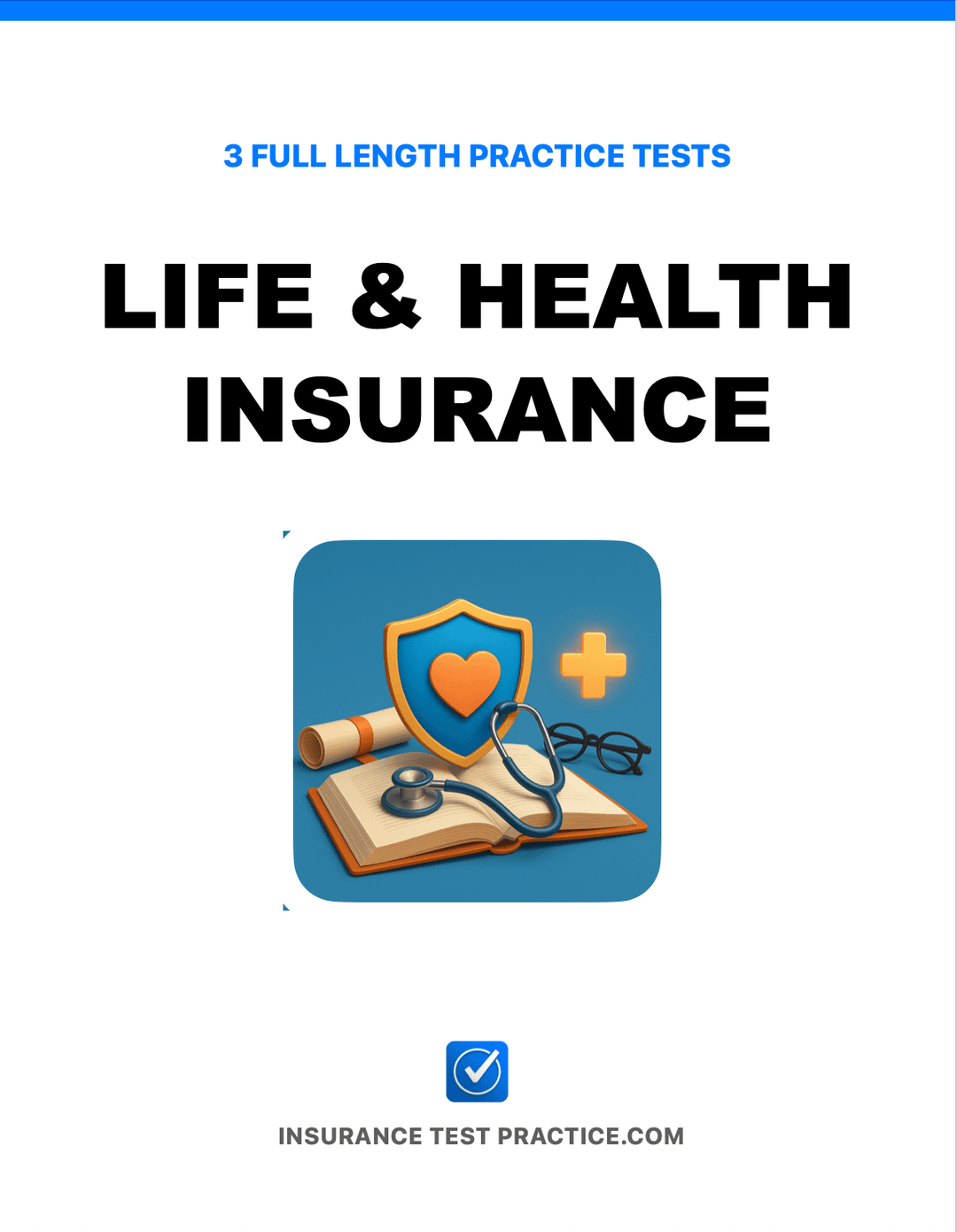
3 Full-Length Practice Tests Included
Get instant access to our printable 480-question practice exam book. Includes 3 complete Life & Health insurance practice tests — each with a 80-question Life section and a 80-question Health section — plus detailed answer keys with explanations. Perfect for timed practice sessions that mirror the real exam.
Essential Michigan Insurance Exam Guides & Tips
Master every aspect of the Michigan insurance licensing exam with our expert guides and insider knowledge.